Special addition here from Phyllis Klein on 04/17/2012: “Neighbors interested in attending the upcoming April 20th Fab Lab DC Workshop: Intro to Inkscape + Laser Cutting can email fab@fablabdc.org to receive a 10% discount code.”
+++
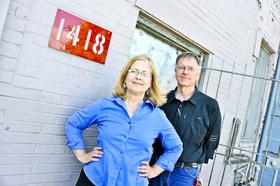
See this Washington Post article on the Fab Lab, 1418 North Capitol Street NW. I have included the first few paragraphs of the story; you can click on the link to read the entire article.
As fab labs spread across U.S., modern-day tinkerers reimagine a nation that makes stuff
By Monica Hesse, Published: April 15
The construction permit for 1418 North Capitol Street was issued in October 1884 to a man named Henry Keller. He wanted the building to be two stories tall, tin-roofed, 24 feet wide and 60 feet deep, large for what he planned to use it for, which was a blacksmith shop. The most useful of useful trades — an occupation built on making things, on skill.
Over the course of a few years, Henry expanded the shop. He had 11 children, only two of whom made it to adulthood, one of whom also became a blacksmith, and he had retired by the time the 1920 Census rolled around.
And then:
Roaring Twenties, rouged knees, all that jazz. Depression and Dorothea Lange photos and wars. (No more horses = no more blacksmiths.) Automatic dishwashers, electric typewriters, progress, progress, and Bill Gates and clunky cell phones, then teeny cell phones, then ear-based cell phones, then Siri in your cell phone, connecting you to call centers in India. The iPad. Progress.
Now, today, in the spring of 2013, 1418 North Capitol Street is owned by Phyllis Klein, a soft-spoken middle-aged woman with a smooth blond bob. One Wednesday morning in April, she gives a building tour — first of the upstairs, which has been converted into a showcase space, then the downstairs, which has become the Fab Lab D.C., which is where everything is made.
And what is everything? Everything. (Ish.) Miniature chairs and a wide selection of earrings and LED lamps and the prototype for a “digital skin” wall and electronic gewgaws and gizmos, piled on tables, cheerfully cluttered.
 Bates Area Civic Association